Indoor vs Outdoor Sauna: How to Choose Where It Goes
The placement decision, worked through: space, cost, power, moisture, foundations, weather, cooling off and permits.
Quick answer
Choose an indoor sauna for the easiest everyday use: it sits near a shower and your electrical panel and stays out of the weather, but it needs a suitable room, insulation and a vapor barrier. Choose outdoors if you have the yard and want space, views or a wood stove, and budget for a level foundation, a longer power run and exterior upkeep.
On this page
- Indoor vs outdoor sauna at a glance
- How much space does each one need?
- How do the costs compare?
- What do electrical and plumbing look like?
- Indoors: moisture, vapor barrier and ventilation
- Outdoors: foundation, weather and upkeep
- Where will you cool off?
- Permits, HOA rules and resale
- Which should you choose?
- Common questions
Put the sauna indoors if you want the easiest everyday habit: it sits near a shower and your electrical panel, it’s out of the weather, and you can reach it in slippers in January. Put it outdoors if you have the yard and want more room, a view, or a wood stove, and you’re happy to treat it as a small building with a foundation, a longer power run and exterior upkeep.
Neither location makes the sauna itself better or healthier. What matters is which one you’ll actually use, and which one your house and lot can support without surprises. Here’s how the two compare, factor by factor.
Indoor vs outdoor sauna at a glance
| Factor | Indoor sauna | Outdoor sauna |
|---|---|---|
| Everyday convenience | Steps from a shower and changing space | A walk outside, in all weather |
| Space | Needs a room with about 7 feet of interior height | Needs level, well-drained ground and access for delivery |
| Extra work | Framing, insulation, vapor barrier, a water-tolerant floor (for a built-in room) | Foundation, longer electrical run, exterior finish |
| Electrical | Usually a short run from the panel | Longer run, sometimes trenched; the heater’s control unit must stay dry |
| Moisture | Vapor barrier and ventilation protect the house | Rain, snow and drainage around the base |
| Heater options | Electric or infrared; wood means a chimney through the house | Electric or wood; check the rating before choosing infrared |
| Warm-up | Starts from room temperature | Slower in cold weather |
| Cooling off | A shower nearby | Fresh air, a bench, snow or a plunge tub |
| Permits | Electrical permit for the circuit; building permit if you remodel | Electrical permit, plus possible building, setback and HOA rules |
| Best for | Frequent use, cold climates, small lots | Yards with space, views, wood heat, groups |
How much space does each one need?
Indoors, the limit is usually height, not floor area. A good sauna ceiling is close to 7 feet: sauna maker Saunafin uses 6 feet 11½ inches as its standard residential height and says a sauna should never be taller than 8 feet. Basements, garages, large closets and spare bathrooms all work if they can give you that height plus a door that swings outward. A freestanding cabin also needs breathing room around it; Sunlighten, for example, recommends 4 inches between its cabins and the walls and 12 inches above.
Outdoors, you need a flat, level spot with good drainage, away from standing water and clear of roots and debris, according to Almost Heaven’s site-prep guide. Leave room around the sauna for air circulation and maintenance, plus a sensible path from the house that you’ll want to walk in the dark in winter.
How do the costs compare?
We don’t print prices because they change fast, but the cost lines are predictable.
An indoor sauna built into an existing room shares the house’s walls and roof and usually sits close to the electrical panel. The extra cost goes into making the room a sauna: framing, about 3½ inches of fiberglass insulation (Saunafin warns that Styrofoam can’t withstand sauna temperatures), a foil vapor barrier, cedar or other lining, benches, and a floor of concrete or tile. On a wood subfloor, Saunafin calls for tile over a water membrane. A prefab indoor cabin skips most of that but still needs a suitable floor and circuit.
An outdoor sauna arrives with its own walls and roof, so you’re paying for the structure itself plus a foundation, delivery to the site and a longer electrical run. Almost Heaven lists the distance from the sauna to your panel as one of the main factors in electrical cost and suggests getting quotes from two or three licensed electricians. If you add a wood stove, budget for the chimney too.
For a full line-by-line budget, see our home sauna buying guide.
What do electrical and plumbing look like?
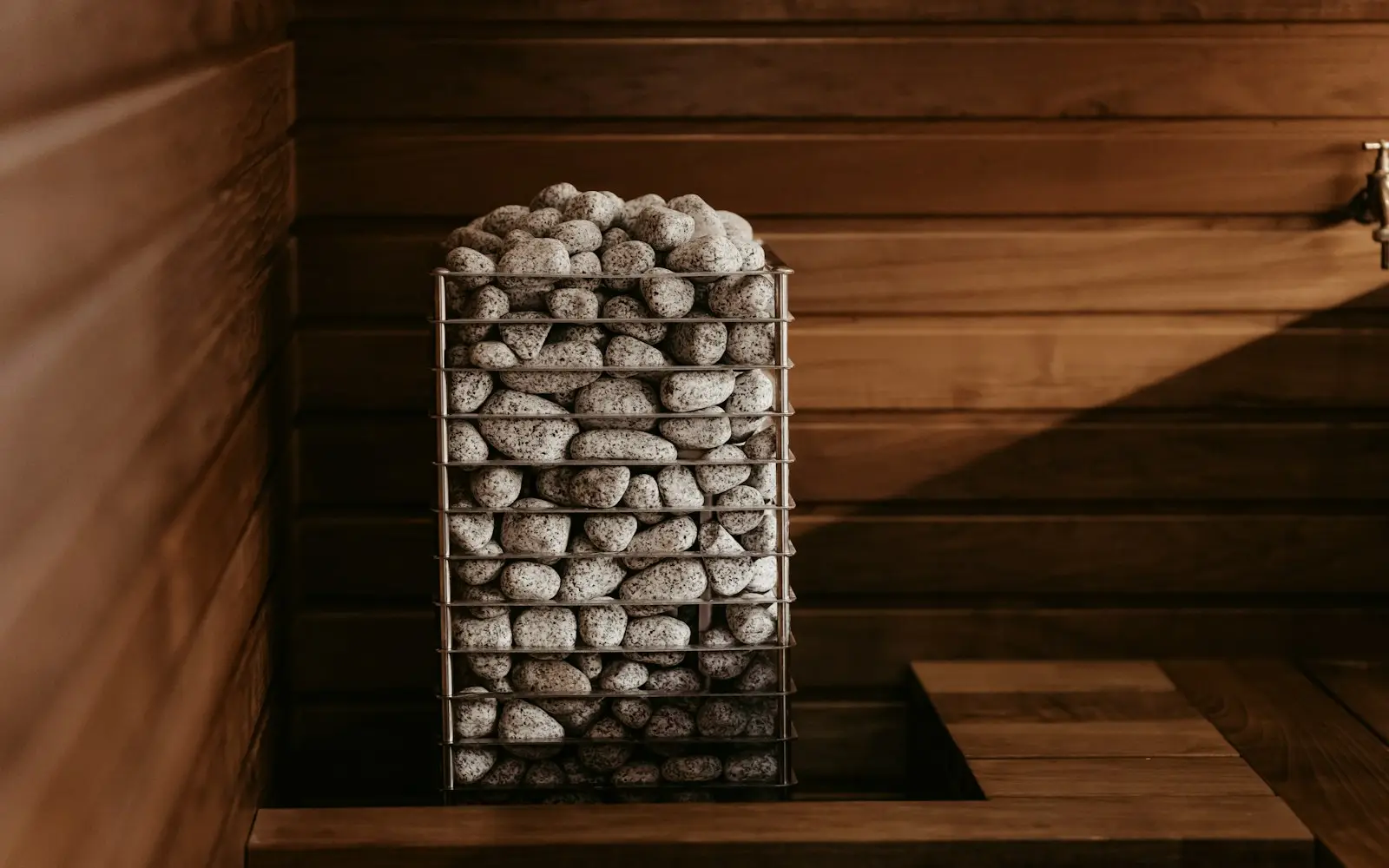
The heater doesn’t care where it lives: a traditional electric heater needs a dedicated, hardwired 240-volt circuit either way. In Harvia’s US manual for its KIP heaters, a 6 kW model draws 25 amps and an 8 kW model 33.3 amps. Almost Heaven says the standard heaters for its kits need 30-40 amps.
Two outdoor details are easy to miss:
- The control unit must stay dry. The same Harvia manual says the control and contactor must be installed in a dry place, away from spas, pools and showers, and not outdoors. With a separate control panel, plan where it will live.
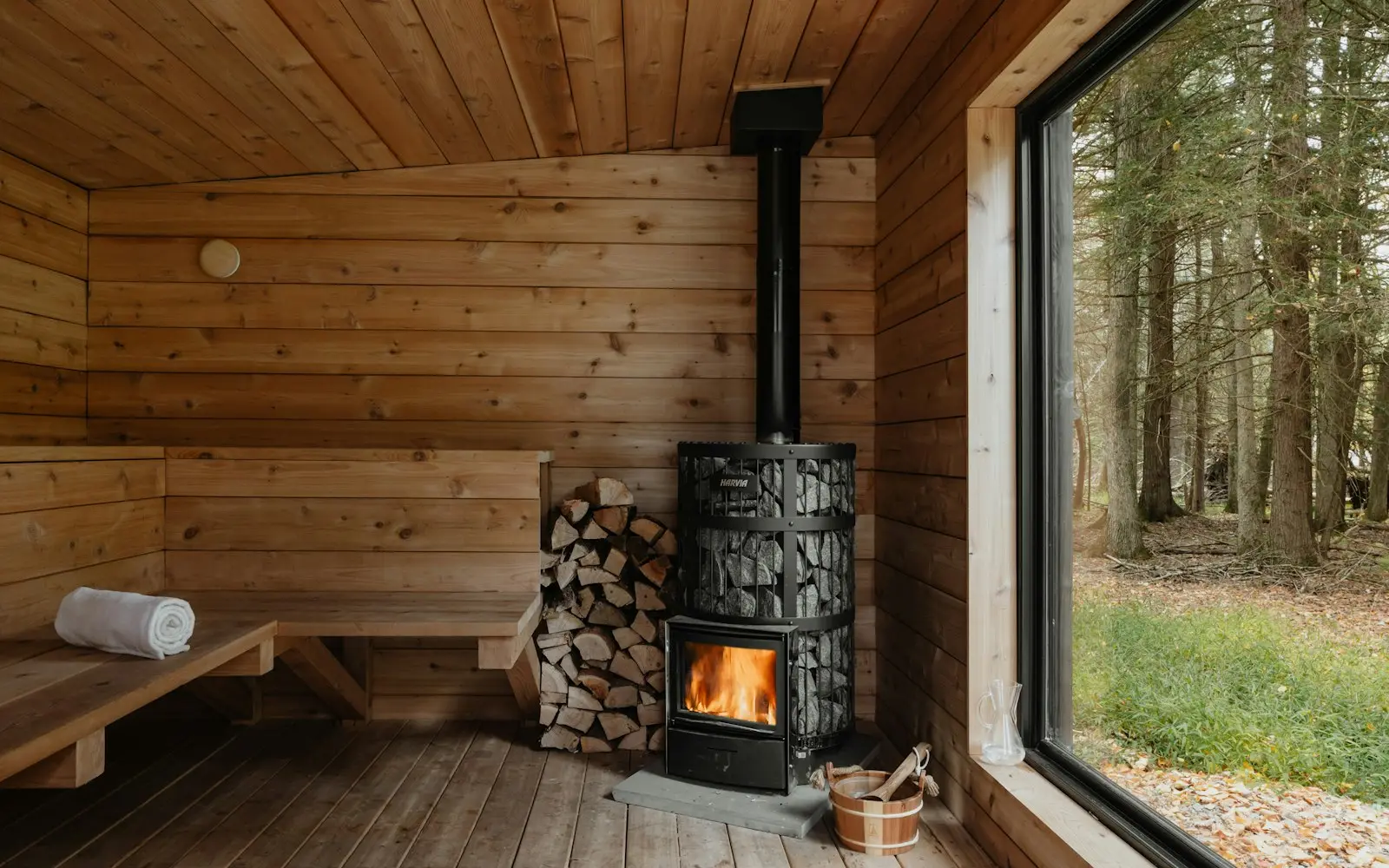
- Wood is an outdoor-friendly option. A wood-burning stove needs no electricity for heat, which suits outbuildings and off-grid sites. It does need a chimney and the stove maker’s safety distances to anything combustible, which vary by model. The Finnish Sauna Society describes both continuously heated stoves, fired before and during bathing, and heat-storing stoves, which are fired once and take a few hours to heat.
Plumbing is optional for a home sauna. Saunafin recommends a floor drain for a residential sauna but calls it not essential, since water is used in moderation and evaporates. What you do want is somewhere to rinse off, which is one of the strongest arguments for indoors.
If you’re considering infrared, check placement early. Sunlighten, for one, says its saunas aren’t designed to be placed outdoors, so confirm a cabin’s rating before you plan a garden install.
Indoors: moisture, vapor barrier and ventilation
A traditional sauna is a hot, dry room, not a wet one. Saunafin puts sauna humidity at 10-20% even when you use water, because the steam from the stones dissipates quickly. Still, the room’s construction protects the rest of the house:
- Insulation: 3½-inch fiberglass batts in walls and ceiling.
- Vapor barrier: kraft-backed aluminum foil across the inside face of the studs, on walls and ceiling.
- Strapping: 1×2 strips over the foil before the lining, so fasteners don’t puncture it.
- Floor: concrete or tile. Almost Heaven advises against carpet or hardwood under a sauna.
- Ventilation: set up exactly as your heater manual shows. Harvia’s KIP manual asks for six air changes per hour and shows where the supply and exhaust vents go; other makers use different layouts, so follow the one for your heater.
After each session, leaving the door open helps the room dry, which the Harvia manual also suggests. A steam room is a different and much wetter build; see sauna vs steam room if that’s what you’re weighing.
Outdoors: foundation, weather and upkeep
Foundation. Almost Heaven’s site-prep guide lists four bases: a concrete pad about 3-4 inches thick (its pick for larger saunas), at least 4-6 inches of compacted gravel, a sturdy deck with ventilation underneath, or level pavers or blocks. Whatever you choose, check level again before assembly; a twisted base stresses the structure.
Weather. Outdoor saunas are built for the elements; Almost Heaven says its barrel shape sheds water and snow. The same maker treats exterior stain or sealant as optional and says never to treat the interior. Its barrel saunas may need their bands tightened, or filler staves added, during the first few months.
Cold-weather warm-up. Heat-up time depends on the air around the sauna, so in winter an outdoor sauna takes longer to reach temperature. Almost Heaven suggests giving it more time in cold weather and recommends a heater upgrade for indoor-style saunas used outside in northern climates.
Exterior wood. Siding that faces sun and rain is a different job from interior paneling; our sauna wood guide covers both.
For shapes (barrel, cabin, cube) and specific outdoor models, see our guide to outdoor saunas.
Where will you cool off?
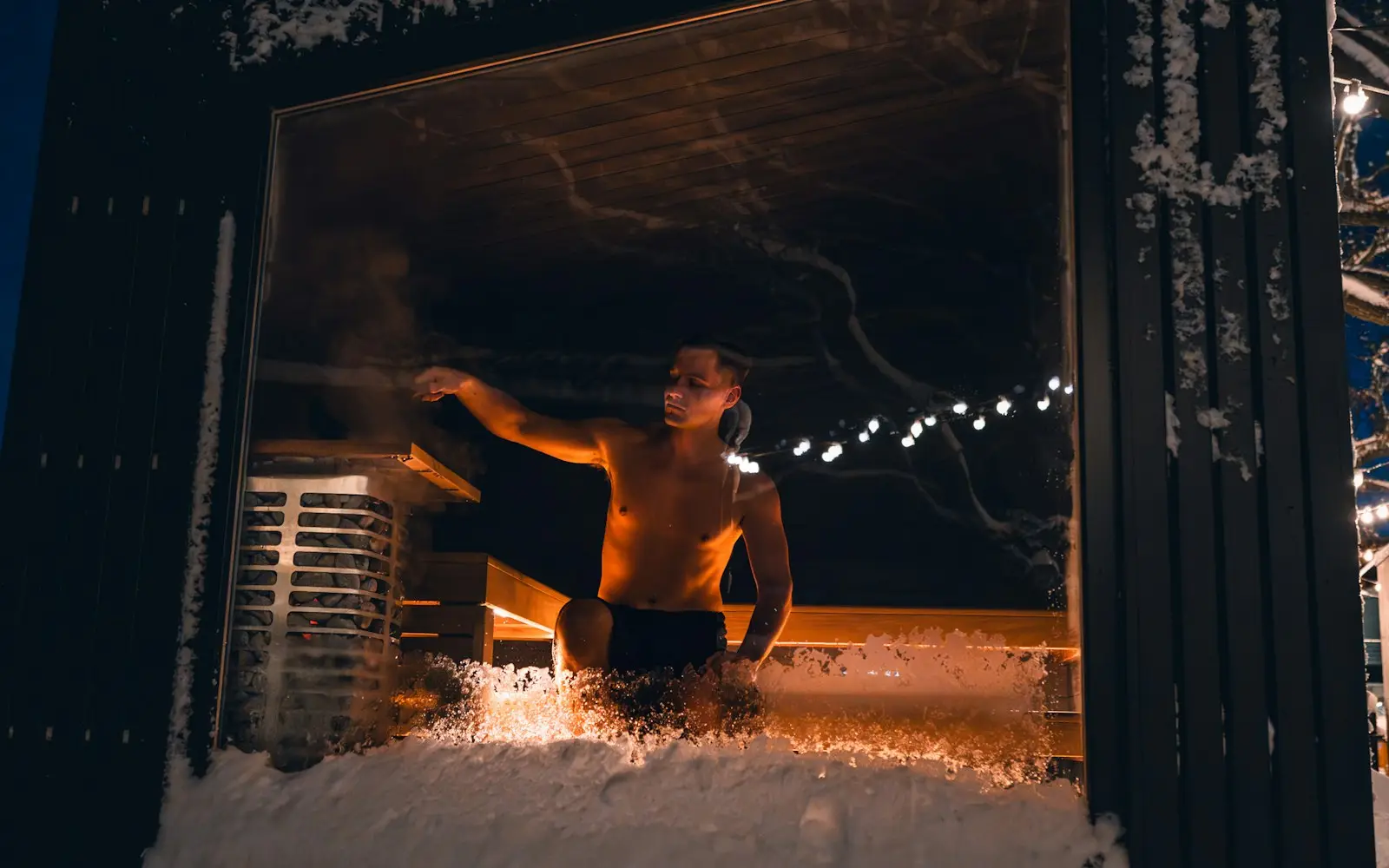
Cooling down between rounds is half the ritual. Indoors, that usually means a shower and a chair in the next room. Outdoors, it can mean sitting in the open air, rolling in snow, or a plunge tub, which is a big part of why people love garden saunas. If a plunge tub is in your plans, give it its own level spot (and power, if it has a chiller), and keep the walking route short and non-slip.
Permits, HOA rules and resale
Rules vary by town, so ask your building department before you order:
- Indoors: the new heater circuit will typically need an electrical permit and inspection; remodeling a room may need a building permit too.
- Outdoors: the same electrical permit, plus whether the structure needs a building permit at its size, how far it must sit from property lines, and any rules for wood stoves and chimneys.
- HOA: outdoor structures are more likely to need approval. Get it in writing.
On resale, we’d be cautious. We haven’t seen reliable data showing that either kind of sauna adds value, and buyers vary a lot. Buy one for the years of use you’ll get from it, not as an investment.
Which should you choose?
- You’ll use it most days, winters are long, or the yard is small: indoors.
- You have the yard and want views, a wood stove or space for friends: outdoors.
- You rent: a freestanding indoor cabin or a portable sauna that can move with you.
- No spare 240-volt capacity and no yard: a small infrared cabin on a dedicated 120-volt circuit, indoors.
Still deciding what kind of heat you want? Start with which type of sauna is best, then come back to placement.
Common questions
Can you put an outdoor sauna indoors, or an indoor sauna outside?
Outdoor saunas are built for weather, so moving one indoors mainly means checking ceiling height, floor and access. Going the other way is riskier. Almost Heaven says an indoor model used outside must be covered so water and snow can't collect on it, and suggests a heater upgrade in cold climates. Some infrared cabins, Sunlighten's among them, aren't designed for outdoor use at all, so check the manual before you try.
Does an indoor sauna cause moisture problems in the house?
A properly built sauna adds surprisingly little. It is a hot, dry room: humidity stays around 10-20% even when you throw water on the stones, because the steam fades quickly. Build it with insulation and a foil vapor barrier on the warm side, set up ventilation as the heater manual shows, and leave the door open after bathing so the wood dries. A steam room is a different and much wetter project.
Can I put a sauna in my garage?
Often, yes. A garage usually has a concrete floor, which suits a sauna, and may be close to the electrical panel. Treat it like any indoor build: frame or place the sauna so the interior ceiling is about 7 feet, insulate it with a foil vapor barrier if you are building the room, and keep the heater's control unit in a dry spot. In an unheated garage, expect longer warm-ups in winter.
Is an indoor or an outdoor sauna cheaper?
It depends on what you already have. An indoor sauna in an existing basement or garage can be the cheaper route because the walls, roof and power are close by. An outdoor sauna brings its own walls and roof but adds a foundation, a longer wiring run or trench, and exterior care. Price both versions line by line, with an electrician's quote, before you decide.
Sources
- Saunafin: Commercial and residential sauna specifications
- Harvia: KIP sauna heater owner's and installation manual, US edition (2023)
- Almost Heaven Saunas: How to prepare your space for an outdoor sauna
- Almost Heaven Saunas: Frequently asked questions
- Sunlighten: Frequently asked questions (outdoor placement, ventilation)
- Sunlighten: Guides and spec sheets (cabin clearances and electrical requirements)
- Finnish Sauna Society: The sauna heater
- Narvi: Wood-burning sauna stoves (chimney and safety distances)
We update this guide when products, standards or research change. Spot something out of date? Tell us.