How Long Should You Stay in a Sauna?
Real numbers for first-timers and regulars, how many rounds to do, how infrared and steam rooms differ, and the signs that mean get out now.

Quick answer
If you're new, stay in for 5 to 10 minutes. Once you're used to the heat, 10 to 20 minutes per round is typical in a traditional sauna, and Harvard Health advises no more than 15 to 20. Most people do one to three rounds with cooling breaks between them. Leave sooner if you feel dizzy, sick or unwell.
On this page
- How long should a first-timer stay in?
- How long per round once you’re used to it?
- How long is too long in a sauna?
- Sauna time by type: traditional, infrared and steam room
- How many rounds should you do per visit?
- What did research protocols actually use?
- Signs it’s time to get out now
- What shortens a safe session?
- Common questions
Stay in a sauna for 5 to 10 minutes if you’re new to it, and 10 to 20 minutes per round once you’re used to the heat. Harvard Health advises staying in no more than 15 to 20 minutes at a time, and Cleveland Clinic gives similar advice. Most people do one to three rounds per visit, with a cool-off and a rest between each.
Those numbers are a starting point, not a target. How long you can comfortably stay depends on the temperature, which bench you sit on, how much water goes on the stones, how hydrated you are, and how used to the heat your body is. The best rule is the oldest one: get out when you’ve had enough, not when the clock says so.
How long should a first-timer stay in?
Start with 5 to 10 minutes on a lower bench. Cleveland Clinic says beginners may need to start with about five minutes and add more time each session.
On a first visit, one or two short rounds is plenty. Cool off fully between them and see how you feel the next day. If everything felt good, add a few minutes or another round next time. Our first-timer’s guide to using a sauna walks through a whole visit step by step.
How long per round once you’re used to it?
Most regular bathers settle at 10 to 20 minutes per round in a traditional sauna. Cleveland Clinic’s family medicine physician suggests keeping it around 15 to 20 minutes, and Harvard Health says no more than 15 to 20.
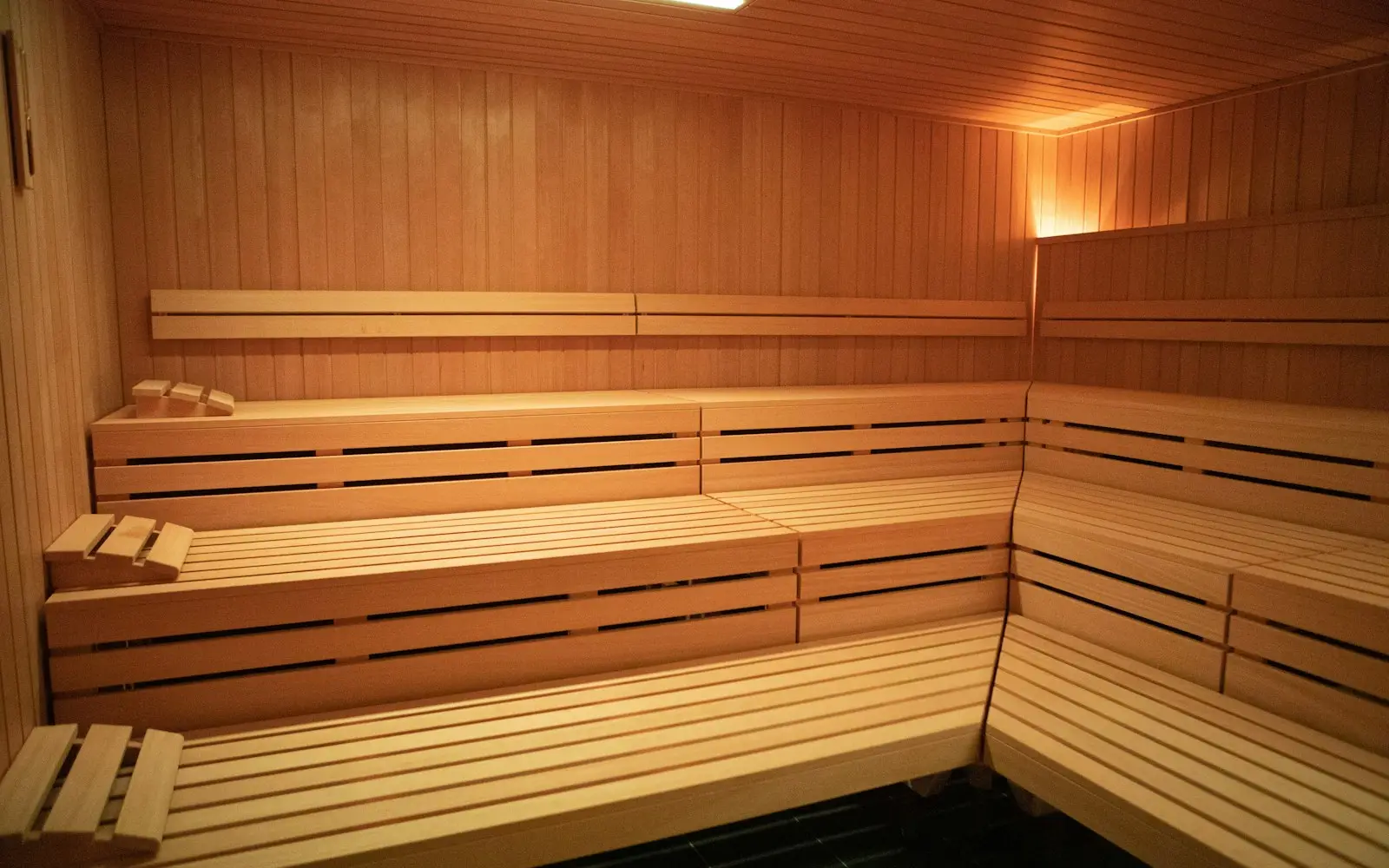
The room makes a big difference. Cleveland Clinic puts typical traditional saunas between 150°F and 195°F (66-91°C). Fifteen minutes on the bottom bench at 160°F is a very different experience from fifteen minutes on the top bench at 190°F with someone throwing water on the stones. Our page on sauna temperature explains how heat and humidity add up.
How long is too long in a sauna?
For most people, a single round in a hot traditional sauna that stretches well past 20 minutes is longer than the guidance from Harvard Health and Cleveland Clinic. The heat builds quickly: Harvard Health notes that skin temperature climbs to about 104°F (40°C) within minutes and the pulse rises by 30% or more.
Core temperature takes longer to rise, which is part of why a session can feel fine right up until it doesn’t. In a 2026 study of 12 healthy adults in an infrared sauna at 149°F (65°C), core temperature started climbing at around 20 minutes and rose by about 2.5°F (1.4°C) over 45 minutes, while average heart rate went from 74 to 153 beats per minute.
You may have read that longer sessions are linked with better heart health. In Finland’s long-running KIHD study of 2,315 middle-aged men, those who reported sessions of more than 19 minutes had a lower risk of sudden cardiac death than those who reported under 11 minutes. That is an observational link in experienced Finnish bathers, though, and it doesn’t show that sitting longer causes any benefit. It’s not a reason to push past what feels comfortable.
Sauna time by type: traditional, infrared and steam room
| Sauna type | Typical air temperature | What studies used | A sensible starting point |
|---|---|---|---|
| Traditional (Finnish) | 150-195°F (66-91°C) | 2-3 rounds of 10-15 minutes at about 194-196°F (90-91°C), with 5-minute breaks | 5-10 minutes when new, 10-20 once used to it |
| Infrared | 110-135°F (43-57°C) | 15 minutes at 140°F (60°C) plus 30 minutes resting under a blanket; one 45-minute session at 149°F (65°C) | 10-15 minutes when new; build up slowly |
| Steam room | About 110-115°F (43-46°C), near 100% humidity | 3 rounds of 15 minutes in a humid steam bath at 138°F (59°C) | 5-10 minutes; keep rounds shorter than in a dry sauna |
Temperatures for traditional and infrared saunas are Cleveland Clinic’s typical ranges; the steam room range is the usual setting for a home steam room (see sauna vs steam room for the source). The study columns come from the protocols described below. The starting points are our suggestions.
Infrared saunas
Infrared rooms run much cooler, so it’s tempting to stay in longer. Cooler doesn’t mean easy, though. In the 2026 study above, a single 45-minute infrared session at 149°F produced substantial heat strain, and participants rated it extremely hot and extremely uncomfortable by the end. The Japanese WAON-CHF trial, which used an infrared sauna for hospital patients with heart failure, kept the hot part to 15 minutes at 140°F (60°C), followed by 30 minutes resting under a blanket. Start with 10 to 15 minutes and add time only if you feel good.
Steam rooms
Steam rooms are harder on the body than their temperature suggests, because sweat struggles to evaporate from your skin in such humid air. In a 2014 study of 10 men who did three 15-minute rounds in a dry sauna at about 196°F (91°C) and, a month later, in a humid steam bath at about 138°F (59°C), the steam bath raised core temperature and heart rate more and put more overall strain on the body by the researchers’ measures, even though it was much cooler. Keep steam room rounds on the short side. Our comparison of sauna vs steam room covers the other differences.
How many rounds should you do per visit?
One to three rounds is the usual range, and one is a perfectly good sauna. The 2014 Biology of Sport paper describes a typical dry sauna bath as two to three entrances to the hot room, each followed by whole-body cooling.
A round is simple: heat, then cool off with a shower or fresh air, then rest until your breathing settles and you feel comfortable. Sip some water during the break. Then go back in only if you want to.
Here’s how that might look in practice:
| First visit | Regular bather | |
|---|---|---|
| Round 1 | 5-8 minutes, lower bench | 10-15 minutes |
| Break | Cool shower, rest 5-10 minutes, sip water | Cool shower or fresh air, rest, sip water |
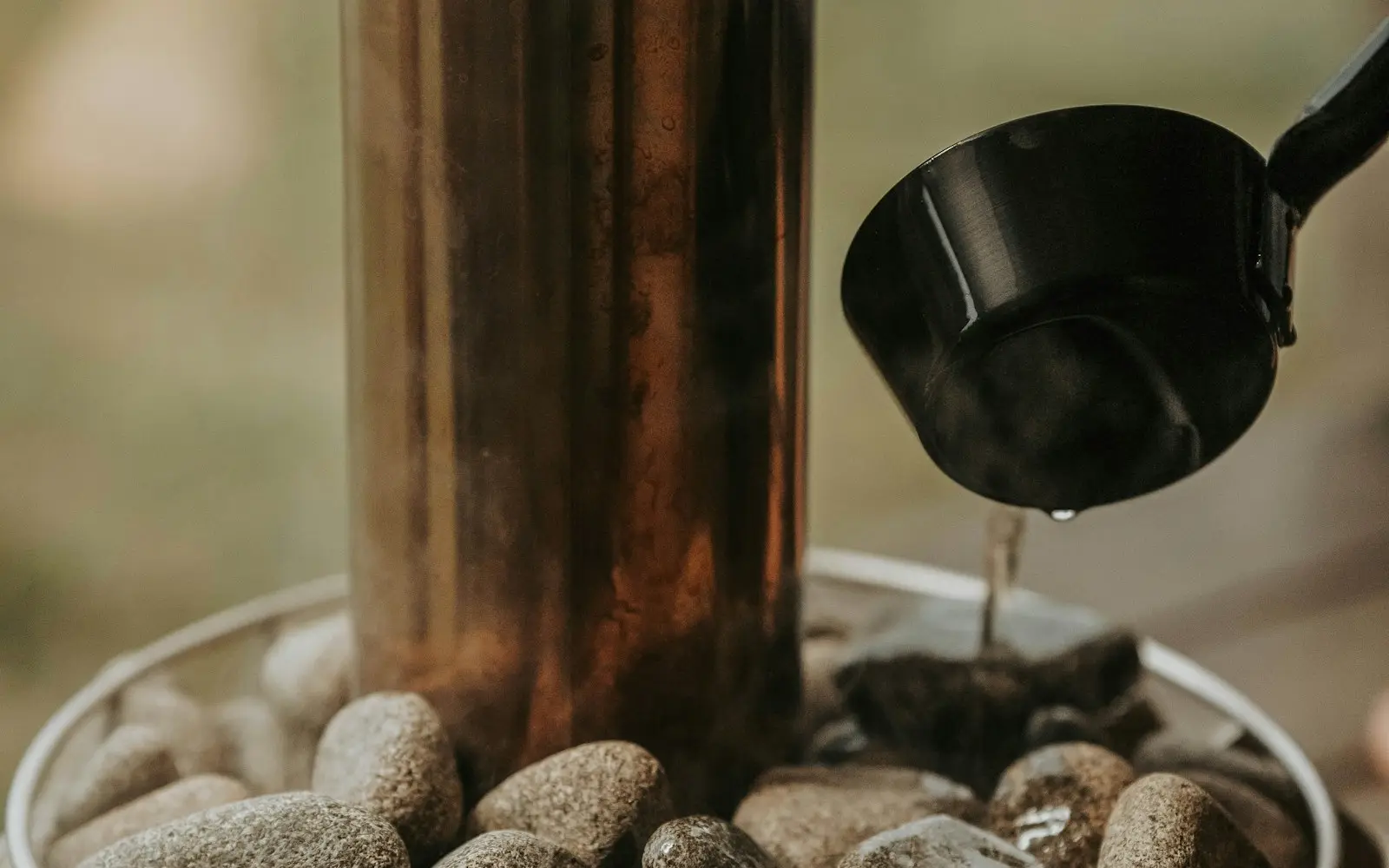
| Round 2 | Optional, 5-8 minutes | 10-15 minutes, maybe with löyly |
| Break | Cool off and rest | Cool off and rest |
| Round 3 | Skip it | Optional, 10-15 minutes |
| Total time in the heat | About 5-16 minutes | About 20-45 minutes |
Splitting your time into shorter rounds with cooling breaks is how sauna has traditionally been done, and each break gives you a moment to check how you really feel.
What did research protocols actually use?
If you want to copy what scientists did, here is what some well-known studies used. None of them is a prescription, and several involved specific groups of people.
| Study | Who | Sauna | Time in the heat |
|---|---|---|---|
| KIHD cohort, Finland (JAMA Internal Medicine, 2015) | 2,315 men aged 42-60 | Their usual traditional sauna | Self-reported habits, grouped as under 11, 11-19 and over 19 minutes per session |
| Podstawski et al. (2014) | 674 students aged 19-20 | Dry sauna at 194°F (90°C) | 2 rounds of 10 minutes with a 5-minute break, including a 30-second dip in 50°F (10°C) water |
| Pilch et al. (2014) | 10 men aged 25-28, new to sauna | Dry sauna at about 196°F (91°C); steam bath at about 138°F (59°C) | 3 rounds of 15 minutes with 5-minute breaks, including a 2-minute shower at 72°F (22°C) |
| WAON-CHF trial (2016) | 149 hospital patients with advanced heart failure | Infrared sauna at 140°F (60°C) | 15 minutes, then 30 minutes resting under a blanket, once a day for 10 days |
| Jenkins et al. (2026) | 12 healthy adults | Infrared sauna at 149°F (65°C) | One 45-minute session |
In the controlled traditional-sauna studies here, no single round lasted longer than 15 minutes. The longest exposure was in an infrared room, and that 45-minute session left participants rating it extremely uncomfortable.
Signs it’s time to get out now
Leave the sauna right away if you notice any of these:
- Dizziness or feeling lightheaded
- Headache
- Nausea
- Weakness or unusual tiredness
- Shortness of breath
- Feeling unwell in any way you can’t explain
Cleveland Clinic says that if you feel unwell, dizzy, weak or short of breath, you should exit the sauna and seek medical help. Harvard Health’s version is shorter: if you feel unwell during your sauna, head for the door.
Once you’re out, cool down, lie down if you feel faint, and drink water. The NHS says someone with heat exhaustion should start to feel better within 30 minutes of resting somewhere cool and drinking fluids. Call emergency services if they don’t, or if there are signs of heatstroke: confusion, poor coordination, hot skin that has stopped sweating, a fast heartbeat, fast breathing, a seizure or loss of consciousness.
What shortens a safe session?
Plan on shorter rounds, or skip the sauna, when:
- You’ve been drinking alcohol. Don’t sauna at all.
- You’re ill. Harvard Health advises against using a sauna when you’re sick.
- You’re dehydrated, or you’ve just finished a hard, sweaty workout and haven’t had a drink yet. Our guide to drinking water in the sauna has the details.
- You’re out of practice. After a long break, start again with shorter rounds.
- The room is hotter or steamier than usual, or you’re on the top bench with frequent löyly.
Some people should talk to a doctor before using a sauna at all. Cleveland Clinic lists people who are pregnant or trying to get pregnant, people with heart conditions such as severe aortic stenosis, anyone taking medication, and people older than 65 or younger than 16. Our page on who shouldn’t use the sauna has the full picture.
Once you’ve found your rhythm, the next question is how often to go. Our guide on how often to use a sauna looks at what the Finnish research compared.
Common questions
Is 30 minutes in a sauna too long?
In one continuous round in a hot traditional sauna, yes for most people. Harvard Health advises no more than 15 to 20 minutes. Thirty minutes of total heat split into two or three rounds with cooling breaks is a different thing; research protocols have used 20 to 45 minutes of total heat divided that way. Infrared rooms are cooler, but long sessions still add real strain.
Is 5 minutes in a sauna enough?
For a first visit, yes. Cleveland Clinic suggests beginners may need to start with about five minutes and add time each session. Five minutes is enough to feel the heat, start sweating and see how your body responds. If you feel good, try a second short round after cooling off, or add a few minutes next time.
How long should you stay in a sauna to lose weight?
No length of sauna session causes meaningful fat loss. The weight you lose in a sauna is sweat, and it comes back as soon as you drink. Studies have measured average losses of under 2 pounds per visit. Staying longer to chase the scale only raises the risk of dehydration and overheating.
Can you stay in a sauna too long and get sick?
Yes. Staying in too long can lead to dehydration or heat exhaustion, with dizziness, headache, nausea and heavy sweating. The NHS says someone with heat exhaustion should start to feel better within 30 minutes of cooling down and drinking fluids. If they don't, or they become confused or stop sweating, call emergency services.
Sources
- Harvard Health Publishing: Sauna health benefits: are saunas healthy or harmful? (2020)
- Cleveland Clinic: Get Your Sweat On: The Benefits of a Sauna (2024)
- Laukkanen et al., JAMA Internal Medicine: Association between sauna bathing and fatal cardiovascular and all-cause mortality events (2015)
- Podstawski et al., ScientificWorldJournal: Sauna-induced body mass loss in young sedentary women and men (2014)
- Pilch et al., Biology of Sport: Physiological reactions and strain in dry and steam heat saunas (2014)
- Tei et al., Circulation Journal: Waon therapy for managing chronic heart failure, WAON-CHF study (2016)
- Jenkins et al., Experimental Physiology: Far-infrared sauna exposure at 65°C elevates core temperature (2026)
- NHS: Heat exhaustion and heatstroke (reviewed 2026)
We update this guide when products, standards or research change. Spot something out of date? Tell us.